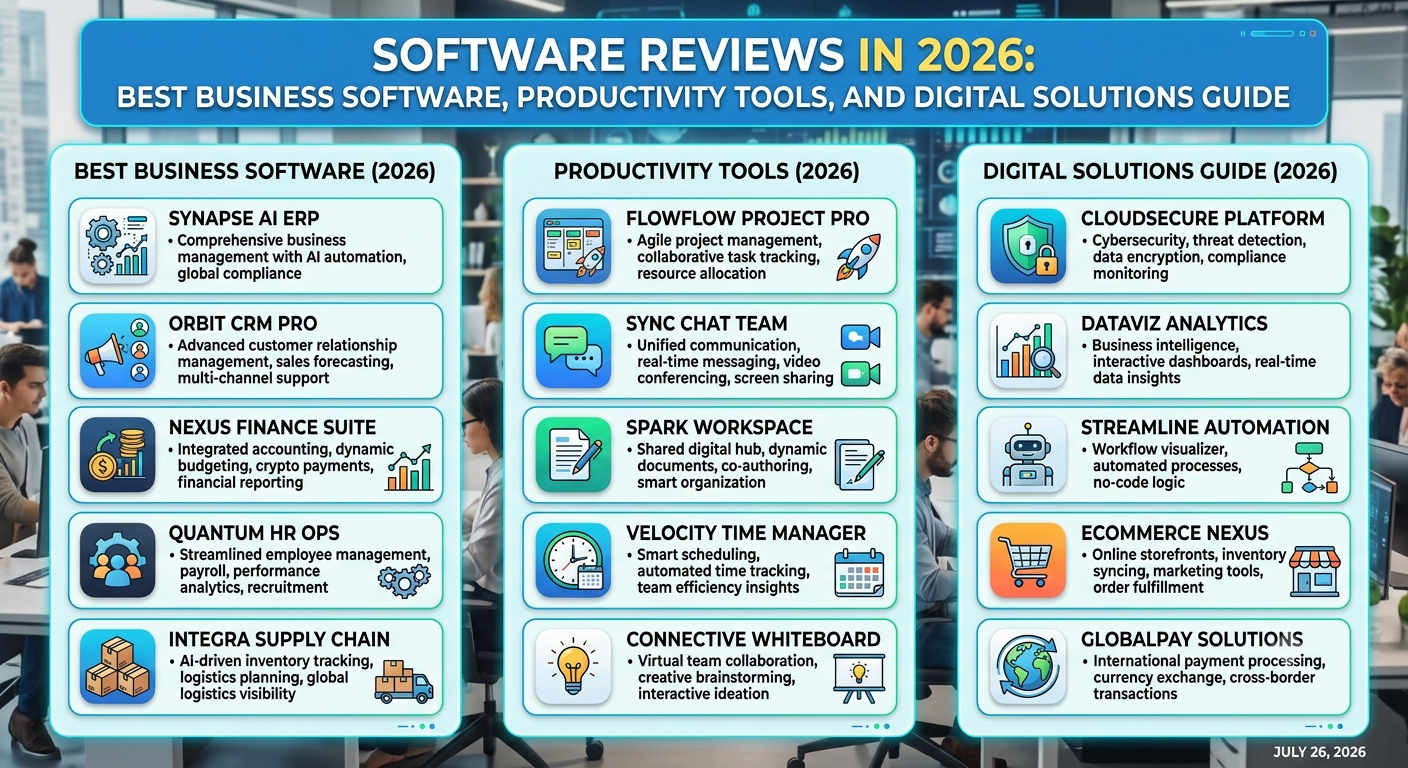
Software Reviews 2026: Best Business Software, SaaS Tools, and Productivity Solutions Explore the best software reviews in 2026, including business software, SaaS platforms, productivity tools, CRM solutions, and digital tools for companies.
Software Reviews in 2026: Best Business Software, Productivity Tools, and Digital Solutions Guide
Software has become an essential part of modern businesses and everyday digital life. From managing projects and communicating with teams to handling finances and improving productivity, software solutions help organizations work faster and more efficiently.
In 2026, businesses are relying more than ever on digital tools, cloud-based platforms, and Software-as-a-Service (SaaS) solutions to improve operations and stay competitive.
However, with thousands of software products available in the market, choosing the right solution can be challenging. Businesses need reliable information about features, pricing, security, usability, and performance before investing in any software.
This is where software reviews become valuable. A detailed software review helps users understand whether a product matches their specific needs and business goals.
This guide explores the importance of software reviews, popular software categories, key features to consider, and how businesses can choose the best digital solutions in 2026.
Why Software Reviews Matter in 2026
The software industry has expanded rapidly, offering solutions for almost every business requirement.
Companies now use software for:
- Team collaboration
- Customer management
- Accounting
- Marketing automation
- Data analysis
- Cybersecurity
- Project management
- Business communication
Choosing the wrong software can lead to wasted time, unnecessary expenses, and operational problems.
Professional software reviews help users compare different options and understand:
- Main features
- Advantages and limitations
- Pricing models
- Security capabilities
- Customer support quality
- Ease of use
A good software comparison allows businesses to make informed decisions instead of choosing tools based only on advertising.
What Is Business Software?
Business software refers to digital applications designed to help organizations manage operations, improve productivity, and automate tasks.
Common business software categories include:
- Customer Relationship Management (CRM)
- Project Management Software
- Accounting Software
- Human Resource Management Systems
- Marketing Automation Platforms
- Enterprise Resource Planning (ERP)
Businesses of all sizes use these tools to reduce manual work and improve efficiency.
Small businesses especially benefit from affordable cloud-based software because they can access powerful features without investing in expensive infrastructure.
Best Software Categories for Businesses in 2026
1. Project Management Software
Project management software helps teams organize tasks, track progress, and complete projects efficiently.
Popular features include:
- Task management
- Team collaboration
- Time tracking
- Progress reports
- File sharing
- Workflow automation
Businesses use project management tools to improve communication between teams and ensure projects are completed on schedule.
When reviewing project management software, companies should consider:
- User interface
- Team size support
- Integration options
- Automation features
- Pricing flexibility
2. Customer Relationship Management (CRM) Software
CRM software helps businesses manage relationships with customers and improve sales processes.
A CRM platform allows companies to:
- Store customer information
- Track sales opportunities
- Manage communication
- Analyze customer behavior
- Improve customer service
Modern CRM solutions use artificial intelligence to provide insights and automate repetitive tasks.
Important CRM features include:
- Contact management
- Sales pipeline tracking
- Email automation
- Reporting dashboards
- Customer analytics
For businesses focused on growth, investing in the right CRM software can improve customer retention and increase revenue opportunities.
3. Accounting and Financial Software
Accounting software helps businesses manage financial operations more efficiently.
Traditional financial management required manual calculations and paperwork. Modern accounting platforms automate many tasks, including:
- Invoicing
- Expense tracking
- Tax management
- Financial reporting
- Payment processing
Small businesses often choose cloud-based accounting software because it provides easy access to financial information from anywhere.
Important features include:
- Security
- Integration with banking systems
- Reporting tools
- Automation options
- User permissions
4. Productivity Software Tools
Productivity software helps individuals and teams complete work faster.
Examples of productivity tools include:
- Document management platforms
- Communication applications
- Note-taking software
- Scheduling tools
- AI-powered assistants
In 2026, AI-powered productivity software has become increasingly popular because it helps users automate repetitive tasks and save valuable time.
Businesses use productivity tools to improve:
- Collaboration
- Organization
- Communication
- Decision-making
5. Cybersecurity Software Solutions
As businesses become more digital, cybersecurity software has become essential.
Security software helps protect organizations from:
- Malware
- Data breaches
- Unauthorized access
- Online threats
Important cybersecurity software categories include:
- Antivirus solutions
- Endpoint security platforms
- Password management tools
- Network monitoring systems
- Data protection software
When reviewing security software, businesses should focus on:
- Protection capabilities
- Ease of management
- Performance impact
- Compliance features
SaaS Software: The Future of Business Applications
Software-as-a-Service (SaaS) has transformed how companies access technology.
Instead of purchasing and maintaining software locally, businesses subscribe to cloud-based services.
Benefits of SaaS software include:
- Lower upfront costs
- Automatic updates
- Remote accessibility
- Easy scalability
- Reduced maintenance
Popular SaaS categories include:
- CRM platforms
- Marketing tools
- Accounting software
- Collaboration tools
- Business analytics platforms
The SaaS industry continues growing because businesses prefer flexible solutions that adapt to changing needs.
How to Choose the Right Software for Your Business
Selecting the right software requires careful evaluation.
Businesses should consider the following factors:
Business Requirements
Before choosing software, identify the problems you want to solve.
Ask:
- What tasks need improvement?
- How many users will use the software?
- What features are essential?
Ease of Use
Software should be simple enough for employees to use without extensive training.
A complicated system may reduce productivity instead of improving it.
Security Features
Security should always be a priority.
Look for:
- Data encryption
- User access controls
- Regular updates
- Security certifications
Integration Options
Good software should work with existing tools.
Integration helps businesses create efficient workflows and avoid unnecessary manual processes.
Pricing and Scalability
Businesses should choose software that fits their budget and can grow with them.
A good solution should provide value without creating unnecessary expenses.
The Role of Artificial Intelligence in Software
Artificial intelligence is becoming a major feature in modern software applications.
AI-powered software can help businesses with:
- Automated reporting
- Data analysis
- Customer recommendations
- Workflow automation
- Content generation
Many software companies are adding AI features to improve user experience and productivity.
In the future, AI will become a standard feature across many business applications.
Software Reviews and Buying Decisions
Professional software reviews help businesses avoid poor investments.
A useful review should analyze:
- Features
- User experience
- Performance
- Pricing
- Security
- Customer support
Businesses should compare multiple solutions before making a final decision.
Reading software reviews from reliable sources can save time and help organizations select tools that provide long-term value.
Future Software Trends in 2026
The software industry continues evolving with new innovations.
Important trends include:
AI-Powered Applications
More software platforms will include artificial intelligence features.
Cloud-Based Solutions
Businesses will continue moving toward flexible cloud software.
Automation Tools
Automation will reduce repetitive tasks and improve efficiency.
Personalized Software Experiences
Software will become more customized based on user needs.
Better Security Integration
Security features will become a standard part of business software.
Frequently Asked Questions
What is the best software for small businesses in 2026?
The best software depends on business needs. Popular categories include CRM, accounting, project management, and productivity tools.
Why are software reviews important?
Software reviews help users compare features, pricing, security, and performance before making purchasing decisions.
What is SaaS software?
SaaS software is a cloud-based application accessed through the internet, usually through a subscription model.
How do businesses choose software?
Businesses should evaluate features, pricing, security, scalability, and integration options before selecting software.
Conclusion
Software has become a foundation of modern business success. From productivity tools and CRM platforms to cybersecurity solutions and cloud-based applications, digital software helps organizations operate more efficiently.
In 2026, businesses need reliable software solutions that improve productivity, protect data, and support growth.
High-quality software reviews make it easier for companies and individuals to understand available options and choose the right tools for their goals.
As technology continues advancing, software will remain one of the most important drivers of innovation and digital transformation.