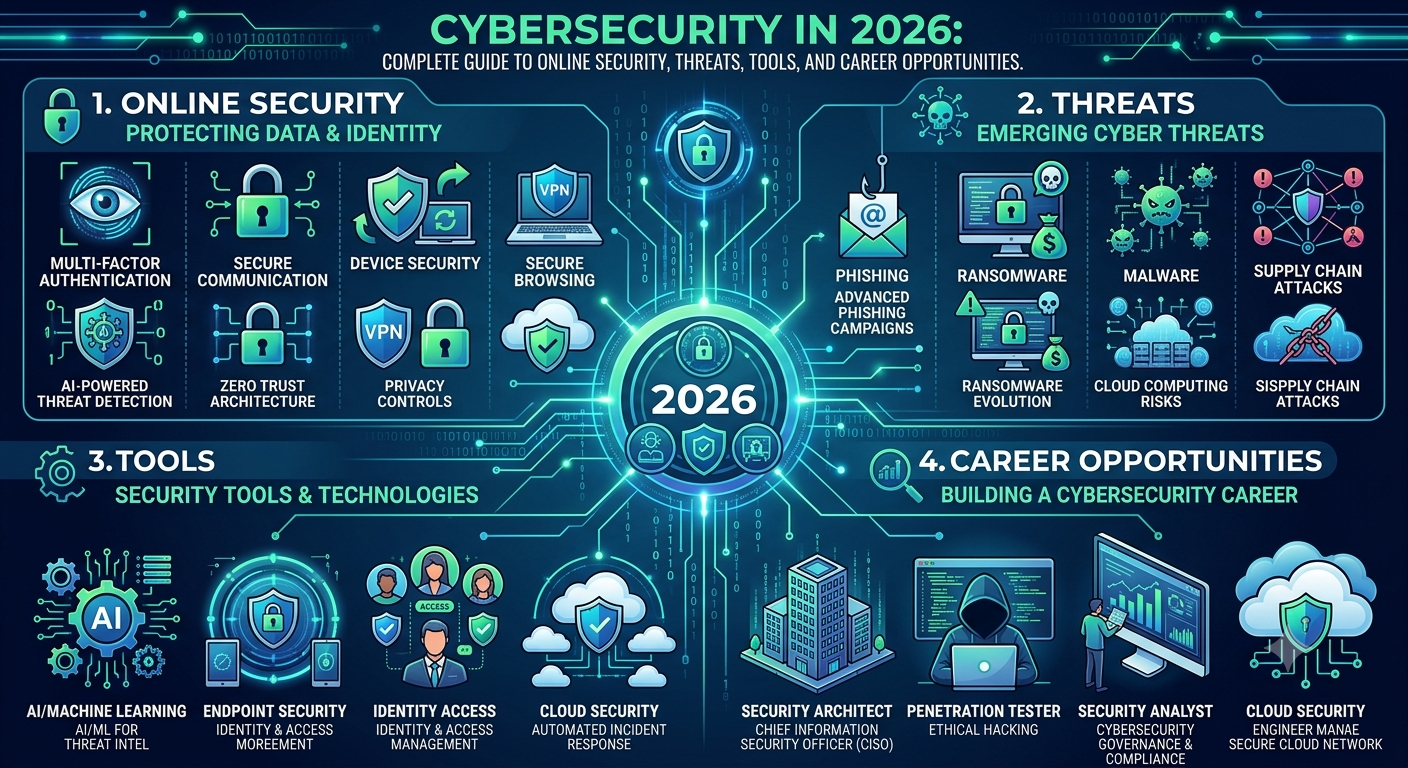
Cybersecurity in 2026: Complete Guide to Online Security, Threats, Tools, and Career Opportunities
Cybersecurity in 2026: Trends, Tools, Careers, and Online Security Guide Learn about cybersecurity in 2026, including security threats, cloud security, data protection, cybersecurity tools, certifications, and career opportunities.
Cybersecurity in 2026: Complete Guide to Online Security, Threats, Tools, and Career Opportunities
Technology has become an essential part of modern life. Businesses store important information online, employees work through digital platforms, and consumers use online services for shopping, banking, communication, and entertainment.
As digital technology continues growing, cybersecurity has become more important than ever. Cybercriminals are developing more advanced techniques, while organizations are investing heavily in security solutions to protect sensitive information and digital infrastructure.
In 2026, cybersecurity is no longer only an IT concern. It has become a major business priority for companies of all sizes. From small businesses to global enterprises, organizations need strong cybersecurity strategies to protect data, maintain customer trust, and prevent financial losses.
This guide explains what cybersecurity is, why it matters, common threats, modern security solutions, career opportunities, and future trends shaping the industry.
What Is Cybersecurity?
Cybersecurity refers to the practice of protecting computers, networks, applications, devices, and digital information from unauthorized access, attacks, and damage.
The main goal of cybersecurity is to ensure:
- Confidentiality: Keeping sensitive information private
- Integrity: Protecting data from unauthorized changes
- Availability: Ensuring systems remain accessible when needed
Cybersecurity includes different areas such as:
- Network security
- Cloud security
- Application security
- Data protection
- Identity management
- Threat monitoring
- Security compliance
As businesses become more dependent on digital systems, cybersecurity has become a critical requirement for maintaining safe and reliable operations.
Why Cybersecurity Is More Important Than Ever in 2026
The number of cyber threats continues increasing as more devices and services connect to the internet.
Businesses today manage:
- Customer information
- Financial records
- Employee data
- Cloud applications
- Online transactions
- Business operations
A security breach can cause serious problems, including financial damage, reputation loss, and legal issues.
Modern companies understand that investing in cybersecurity solutions is not just about preventing attacks. It is also about building customer confidence and ensuring business continuity.
Common Cybersecurity Threats Businesses Face
Cyber threats continue evolving, and organizations must understand the risks they face.
1. Phishing Attacks
Phishing remains one of the most common cybersecurity threats.
Attackers create fake emails, websites, or messages to trick users into revealing sensitive information such as:
- Passwords
- Banking details
- Login credentials
Businesses use security awareness training and email protection tools to reduce phishing risks.
2. Ransomware Attacks
Ransomware is a type of malware that blocks access to files or systems until a payment is demanded.
Organizations affected by ransomware may experience:
- Business downtime
- Data loss
- Financial costs
- Operational disruption
Companies protect themselves through:
- Regular backups
- Endpoint security
- Access controls
- Security monitoring
3. Data Breaches
A data breach occurs when unauthorized individuals gain access to confidential information.
Sensitive data may include:
- Personal information
- Customer records
- Business documents
- Financial information
Strong data protection strategies help reduce the risk of unauthorized access.
4. Cloud Security Risks
Cloud computing has transformed business operations, but it also introduces new security challenges.
Common cloud security issues include:
- Misconfigured cloud settings
- Weak access controls
- Unauthorized accounts
- Data exposure
Companies use cloud security solutions to monitor systems and protect cloud environments.
Cloud Security: Protecting Modern Digital Infrastructure
Cloud security focuses on protecting data, applications, and infrastructure hosted on cloud platforms.
Popular cloud providers include:
- Amazon Web Services (AWS)
- Microsoft Azure
- Google Cloud Platform
Businesses use cloud security practices such as:
- Identity management
- Data encryption
- Security monitoring
- Access control
- Compliance management
As more companies move operations to the cloud, professionals with cloud security skills are becoming highly valuable.
Cloud Security Engineers, Cloud Architects, and Security Specialists are among the fastest-growing technology roles.
Identity and Access Management (IAM)
Identity and Access Management (IAM) is a cybersecurity approach that controls who can access digital resources.
IAM helps organizations:
- Manage user permissions
- Prevent unauthorized access
- Monitor account activity
- Improve security control
A strong IAM system ensures that employees only access the information they need for their roles.
Many organizations are adopting advanced IAM solutions as part of their cybersecurity strategy.
Understanding Zero Trust Security
Zero Trust Security is a modern security model based on the principle:
“Never trust, always verify.”
Traditional security models often focused on protecting the network boundary. However, modern businesses operate across cloud platforms, remote work environments, and multiple devices.
Zero Trust requires continuous verification of:
- Users
- Devices
- Applications
- Network activity
This approach helps organizations reduce security risks in complex digital environments.
Essential Cybersecurity Tools and Solutions
Businesses use different cybersecurity tools to protect their systems.
Security Information and Event Management (SIEM)
SIEM platforms collect and analyze security data from different sources.
They help organizations:
- Detect threats
- Monitor activity
- Investigate incidents
- Respond quickly
Endpoint Security
Endpoint security protects devices such as:
- Computers
- Servers
- Mobile devices
Modern endpoint protection uses advanced technologies to detect suspicious activities.
Firewalls
Firewalls act as a security barrier between trusted and untrusted networks.
They help control network traffic and prevent unauthorized access.
Encryption Technology
Encryption protects information by converting data into a secure format.
It is commonly used for:
- Online payments
- Private communication
- Business information
Cybersecurity Careers and Job Opportunities
The cybersecurity industry offers strong career opportunities because companies worldwide need skilled professionals.
Popular cybersecurity careers include:
Cybersecurity Analyst
Cybersecurity analysts monitor systems, investigate threats, and help organizations improve security.
Cloud Security Engineer
Cloud Security Engineers protect cloud infrastructure and design secure cloud environments.
Security Architect
Security Architects create security strategies and design protection systems for organizations.
Penetration Tester
Penetration testers evaluate security systems by identifying weaknesses.
Security Operations Center (SOC) Analyst
SOC analysts monitor security alerts and respond to potential threats.
Cybersecurity careers often provide competitive salaries, remote work opportunities, and long-term growth potential.
Best Cybersecurity Certifications in 2026
Certifications can help professionals improve their skills and increase career opportunities.
Popular cybersecurity certifications include:
CompTIA Security+
A common starting certification for beginners entering cybersecurity.
CISSP
CISSP is widely recognized for experienced security professionals and leadership roles.
Certified Cloud Security Professional (CCSP)
CCSP focuses on cloud security knowledge and practices.
Certified Ethical Hacker (CEH)
CEH introduces ethical hacking concepts and security testing methods.
AWS Certified Security Specialty
This certification focuses on securing AWS cloud environments.
Future Trends in Cybersecurity
Cybersecurity will continue evolving as technology advances.
Important future trends include:
Artificial Intelligence in Security
AI will help organizations detect threats faster and automate security processes.
Advanced Cloud Security
As cloud adoption grows, cloud protection will become a major priority.
Security Automation
Automation will help security teams respond to threats more efficiently.
Privacy Protection
Companies will focus more on protecting customer information and meeting privacy regulations.
More Cybersecurity Jobs
The demand for cybersecurity professionals is expected to continue growing as businesses face new digital risks.
Frequently Asked Questions
Is cybersecurity a good career in 2026?
Yes. Cybersecurity remains one of the fastest-growing technology fields because organizations need professionals who can protect digital systems.
Do I need a computer science degree for cybersecurity?
A degree can help, but many professionals enter cybersecurity through certifications, practical experience, and hands-on training.
What are the best cybersecurity skills to learn?
Important skills include:
- Network security
- Cloud security
- Risk management
- Security monitoring
- Programming basics
- Identity management
Are cybersecurity jobs remote?
Many cybersecurity roles support remote work because security monitoring and analysis can often be performed digitally.
Conclusion
Cybersecurity has become one of the most important areas of modern technology. As businesses continue adopting cloud platforms, artificial intelligence, and digital services, protecting information and systems will remain a top priority.
Organizations need strong cybersecurity solutions to defend against threats, protect customer data, and maintain trust.
For professionals, cybersecurity offers excellent career opportunities with strong demand, competitive salaries, and long-term growth potential.
By learning cybersecurity skills, understanding modern security practices, and staying updated with emerging trends, individuals and businesses can better prepare for the digital future.