
Ultimate Travel Packing Checklist: What to Pack for Every Trip
Packing for a trip can be stressful, especially when you are trying to decide what you actually need to take with you. Pack too much and your luggage becomes difficult to carry. Pack too little and you may end up buying things you already had at home.
A good travel packing checklist helps you stay organized and avoid forgetting important items. The right packing list will depend on your destination, trip length, weather, activities, and the type of accommodation you choose.
Whether you are planning a short city break, an international vacation, a beach holiday, or an outdoor adventure, this guide will help you prepare your luggage without unnecessary items.
What Should You Pack for a Trip?
The best way to pack is to divide your belongings into categories instead of throwing everything into your suitcase at once.
Your main packing categories can include:
- Travel documents
- Clothing
- Shoes
- Toiletries
- Electronics
- Health and personal items
- Money and payment methods
- Travel accessories
- Activity-specific items
The goal is to take what you are likely to use while leaving enough space for flexibility.
Travel Documents and Important Essentials
Travel documents should be at the top of your packing list because replacing or accessing them during a trip can be difficult.
Important Travel Documents
Depending on your trip, consider packing:
- Passport
- Visa or required entry documents
- Flight or transportation information
- Hotel or accommodation confirmation
- Travel insurance documents
- Driver’s license, if needed
- Copies of important documents
- Emergency contact information
For international travel, check the entry requirements for your destination before departure. Requirements can vary depending on your nationality and destination.
Keep Important Documents Accessible
Do not put your passport and other essential documents at the bottom of your checked luggage.
Keep them somewhere secure and easily accessible, such as your personal bag or carry-on.
It is also useful to keep digital copies of important documents in a secure location, while remembering that digital copies may not always be accepted as substitutes for original documents.
Clothing Packing Checklist
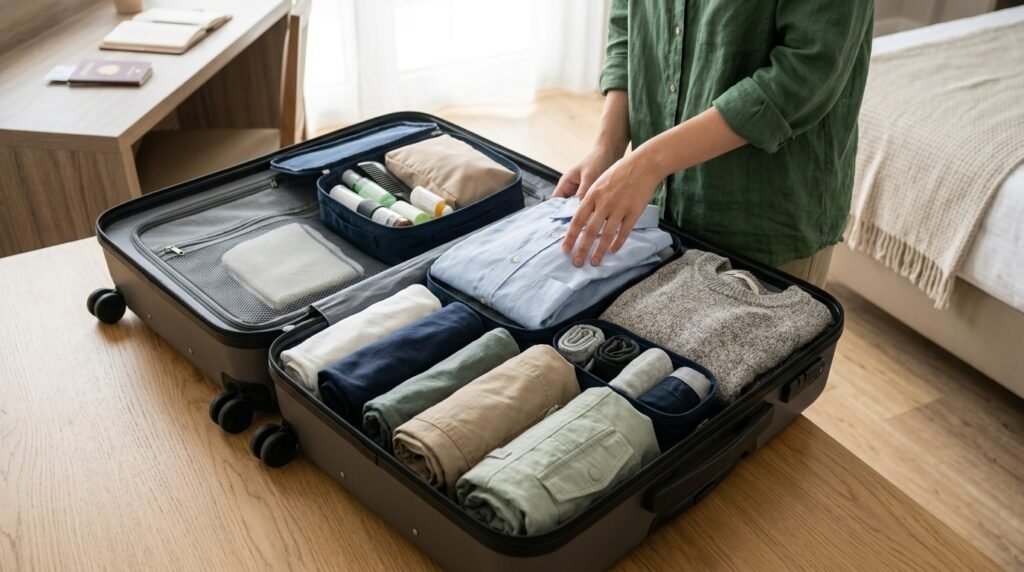
Clothing usually takes up more space than any other category, which is why planning it carefully can make your luggage much easier to manage.
Basic Clothing
The exact amount depends on the length and type of your trip, but a basic list may include:
- T-shirts or tops
- Shirts or blouses
- Trousers or pants
- Shorts, depending on the weather
- Underwear
- Socks
- Sleepwear
- Light jacket or sweater
- Comfortable everyday outfit
- One slightly more formal outfit if needed
You do not necessarily need a completely different outfit for every day.
Choose clothing that can be mixed and matched to create several combinations.
Pack According to the Weather
Check the expected weather for your destination before packing.
For warm destinations, consider:
- Lightweight clothing
- Breathable fabrics
- Sun protection
- Comfortable sandals or shoes
- Swimwear where appropriate
For cold destinations, consider:
- Warm layers
- Sweater or fleece
- Jacket or coat
- Warm socks
- Gloves
- Hat or other cold-weather accessories
Layering can be more practical than packing one extremely heavy item, particularly when temperatures change throughout the day.
Shoes to Pack
Shoes can be heavy and take up considerable luggage space.
For many trips, two or three carefully selected pairs may be more practical than taking several options.
Choose Versatile Shoes
Consider packing:
- Comfortable walking shoes
- Sandals or casual shoes for suitable destinations
- Activity-specific footwear when necessary
If you know you will be walking a lot, prioritize comfort over appearance.
For hiking, sports, or other specialized activities, make sure your footwear is appropriate for the activity and destination.
Toiletries Packing Checklist
Toiletries can easily become excessive if you pack full-sized products that you may barely use.
Basic Toiletries
Your list may include:
- Toothbrush
- Toothpaste
- Shampoo
- Conditioner
- Body wash or soap
- Deodorant
- Hairbrush or comb
- Skincare products
- Razor
- Personal hygiene products
- Sunscreen
- Lip balm
Travel-sized containers can help reduce the amount of space toiletries take up.
Check Airline Liquid Rules
If you are flying, check the current liquid restrictions of the airports and airlines involved in your journey.
Rules can differ depending on the airport, country, and type of item, so do not rely on an old packing list.
Keep liquids organized in an appropriate bag so they are easy to access during security screening.
Electronics Packing Checklist
Electronics are useful for navigation, communication, entertainment, and documenting your trip.
Essential Electronics
Depending on your needs, consider:
- Smartphone
- Phone charger
- Charging cable
- Power bank
- Travel adapter
- Laptop or tablet, if needed
- Camera
- Camera charger
- Headphones or earbuds
You do not need to bring every electronic device you own.
For shorter vacations, your smartphone may be enough for navigation, photos, communication, bookings, and entertainment.
Check Your Destination’s Power Requirements
Electrical outlets and voltage systems can vary between countries.
Before traveling internationally, check whether you need a plug adapter and whether your devices are compatible with the destination’s electrical system.
Health and Personal Care Items
Your personal needs should always be considered when preparing a packing list.
Basic Health Items
Depending on your needs, you may want to pack:
- Regularly used personal medications
- Basic first-aid supplies
- Bandages
- Hand sanitizer
- Insect repellent where appropriate
- Sunscreen
- Personal hygiene items
If you take prescription medication, keep it in appropriate packaging and carry documentation when necessary.
For international travel, check the rules of your destination regarding medications before departure.
Money and Payment Essentials
You should have a reliable way to pay for transportation, accommodation, food, and other expenses.
What to Carry
Consider bringing:
- Primary payment card
- Backup payment method
- Some local currency where useful
- Identification
- Emergency contact information
Avoid keeping all your payment methods and cash in one place.
If possible, keep a backup payment method stored separately from your everyday wallet.
Travel Accessories Worth Packing
Some accessories can make traveling significantly easier without adding much weight.
Useful Travel Accessories
Consider:
- Reusable water bottle
- Small daypack
- Packing cubes
- Travel lock where appropriate
- Sunglasses
- Travel pillow for long journeys
- Eye mask
- Earplugs
- Small umbrella
- Reusable shopping bag
You do not need all of these for every trip. Choose accessories based on your destination and travel style.
Beach Vacation Packing Checklist
If you are traveling to a beach destination, your packing list may look slightly different.
Beach Essentials
Consider packing:
- Swimwear
- Beach cover-up
- Sandals
- Sunglasses
- Hat
- Sunscreen
- Lightweight clothing
- Quick-drying towel if your accommodation does not provide one
- Waterproof bag for wet items
- Reusable water bottle
For destinations with strong sun exposure, adequate sun protection is especially important.
Cold-Weather Trip Packing Checklist
Cold destinations require more attention to layers and weather conditions.
Cold-Weather Essentials
Consider:
- Warm base layers
- Sweater or fleece
- Weather-appropriate coat
- Warm socks
- Gloves
- Hat
- Comfortable waterproof footwear where appropriate
- Scarf
- Moisturizer or lip balm
Check the expected temperatures and conditions before deciding exactly what to bring.
International Travel Packing Checklist
International trips often require additional preparation compared with domestic travel.
Before Leaving Home
Check:
- Passport validity
- Visa or entry requirements
- Travel insurance
- Flight details
- Accommodation details
- Airport transportation
- Currency and payment options
- Mobile connectivity
- Electrical requirements
- Local weather
- Current travel advisories or official guidance
Requirements can change, so use current official sources before departure.
Carry-On Packing Checklist
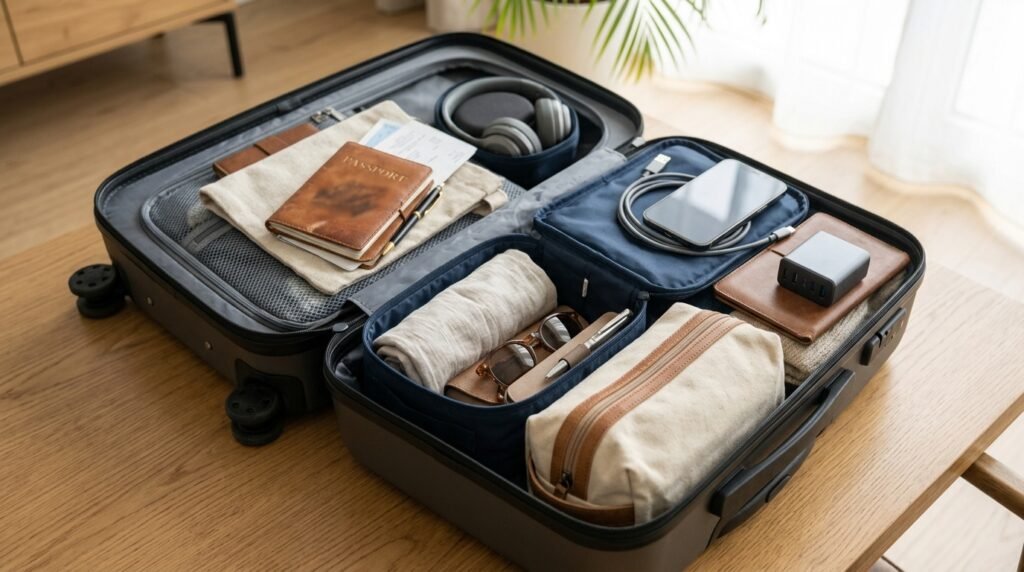
Your carry-on should contain the things you may need during your journey and items that would be difficult to replace if your checked luggage is delayed.
What to Put in Your Carry-On
Consider keeping these items with you:
- Passport and travel documents
- Wallet
- Phone
- Charger
- Essential medication
- Important personal items
- Headphones
- A change of clothes for longer trips
- Basic toiletries within applicable security limits
- Valuable electronics
Always check your airline’s current baggage allowance and restrictions before packing.
Checked Luggage Packing Checklist
Checked luggage can hold items that you do not need during the journey.
What to Pack in Checked Luggage
Depending on your trip:
- Main clothing
- Extra shoes
- Larger toiletries where permitted
- Activity-specific equipment
- Additional personal items
Do not place essential documents, valuable items, or important medication in checked luggage unless you have confirmed that doing so is appropriate.
Complete Travel Packing Checklist
Use this checklist before closing your suitcase.
| Category | Items to Consider |
| Documents | Passport, visa, bookings, insurance documents |
| Clothing | Tops, trousers, underwear, socks, sleepwear |
| Outerwear | Jacket, sweater, coat depending on weather |
| Shoes | Walking shoes, sandals, activity footwear |
| Toiletries | Toothbrush, toothpaste, deodorant, skincare |
| Electronics | Phone, charger, power bank, adapter |
| Health | Personal medication, first-aid basics, sunscreen |
| Money | Cards, cash, backup payment method |
| Accessories | Sunglasses, daypack, reusable bottle |
| Beach | Swimwear, hat, sunscreen, beach items |
| Cold Weather | Warm layers, gloves, hat, suitable footwear |
How to Pack Your Suitcase Efficiently
Knowing what to pack is only half the job. Organizing your luggage properly can make the trip much easier.
Use Packing Cubes
Packing cubes can help separate clothing and keep your suitcase organized.
You might use separate cubes for:
- Tops
- Bottoms
- Underwear
- Sleepwear
- Accessories
They are especially useful when you are moving between multiple destinations.
Put Heavy Items Near the Bottom
When using a suitcase, placing heavier items toward the bottom can help distribute the weight more effectively.
Shoes can also be filled with small items such as socks to make better use of available space.
Leave Some Extra Space
Avoid filling every available gap before your trip.
Leaving some space can make packing for the return journey easier and gives you room for purchases if you decide to shop.
Common Packing Mistakes to Avoid
Even experienced travelers can make packing mistakes.
Packing Too Many Clothes
You probably do not need a completely new outfit for every day.
Choose versatile clothing that works together and can be reused during your trip.
Ignoring the Weather
Packing based on what you normally wear at home can be a mistake if your destination has a very different climate.
Always check the expected conditions before leaving.
Taking Too Many Shoes
Shoes are often bulky and heavy.
Unless your trip requires specialized footwear, choose versatile and comfortable options.
Forgetting Chargers
A missing charger can create an unnecessary problem during your trip.
Before leaving, check each electronic device you are taking and make sure you have the appropriate cables and chargers.
Packing Without Checking Airline Rules
Baggage allowances and security requirements can vary.
Check the current rules for your specific airline and airports before packing.
How to Pack Light Without Forgetting Essentials
Packing light becomes easier when you focus on items you will actually use.
Follow the “Useful, Versatile, Necessary” Rule
Before adding something to your suitcase, ask:
Will I use it?
Can I use it for more than one purpose?
Is it necessary for this particular trip?
If the answer is no to all three, you may not need to pack it.
Plan Your Outfits
Instead of packing individual items randomly, plan a few combinations before your trip.
Choose clothing that works together so you can create multiple outfits from fewer pieces.
Last-Minute Packing Checklist
Before leaving for the airport or starting your journey, check these items one final time:
- Passport and travel documents
- Wallet and payment cards
- Phone
- Phone charger
- Essential medication
- Accommodation information
- Transportation information
- Appropriate clothing
- Comfortable shoes
- Toiletries
- Travel adapter if needed
- Power bank if needed
- Weather-appropriate items
- Checked luggage and carry-on
- Home keys
- Any destination-specific items
Frequently Asked Questions
What should I pack for a trip?
Start with essential travel documents, appropriate clothing, comfortable shoes, toiletries, electronics, personal health items, payment methods, and destination-specific items. Your final list should depend on the destination, weather, trip length, and activities.
How do I avoid overpacking?
Plan your outfits before packing, choose versatile clothing, limit the number of shoes, and avoid packing items you are unlikely to use. A checklist can also help you separate essentials from optional items.
What should I keep in my carry-on?
Keep important travel documents, valuables, essential medication, your phone, chargers, and other items you may need during the journey in your carry-on. Always follow your airline’s current baggage and security rules.
Should I use packing cubes?
Packing cubes are optional, but they can make it easier to organize clothing and find items without unpacking your entire suitcase.
How many pairs of shoes should I pack?
There is no universal number. For many trips, one comfortable everyday pair plus another suitable pair may be enough, while activities such as hiking or formal events may require additional footwear.
What should I pack for international travel?
In addition to normal travel essentials, check passport validity, visa or entry requirements, travel insurance, local electrical requirements, weather conditions, transportation, and any destination-specific rules.
Should I pack a first-aid kit?
A small collection of basic first-aid supplies can be useful, particularly for longer or outdoor trips. Your needs will depend on your destination and activities.
How can I make my suitcase lighter?
Take fewer but more versatile clothes, reduce unnecessary toiletries, limit shoes, and avoid packing items that you can easily obtain at your destination if needed.
Final Thoughts
A good travel packing checklist can make preparing for a trip much easier. Instead of packing at the last minute, organize your belongings into categories and focus on what you actually need.
Start with your travel documents and essential personal items, then add clothing based on the weather and activities you have planned. Keep electronics and toiletries organized, and make sure your carry-on contains important items that you need during the journey.
Most importantly, remember that packing light is about traveling smarter, not taking as little as possible. A well-organized suitcase gives you more flexibility and makes moving from one place to another much easier.
Before your trip, always check your airline’s latest baggage rules and your destination’s current entry requirements so your packing list matches the journey you are actually taking.