
How to Travel on a Budget: Complete Guide to Saving Money
Travel does not have to be expensive. With the right planning, you can reduce unnecessary costs while still enjoying your destination.
The biggest savings often come from making smart choices about flights, accommodation, food, transportation, activities, and travel dates. You do not have to choose the cheapest option every time. Instead, the goal is to get the best experience for the amount you are comfortable spending.
In this guide, you will learn how to travel on a budget, how to plan your expenses, where travelers commonly overspend, and practical ways to save money before and during your trip.
What Does Budget Travel Mean?
Budget travel does not mean traveling without spending any money. It means being intentional about where your money goes.
A budget traveler might spend more on an experience that matters to them while saving money somewhere else.
For example, you could choose a simple hotel but spend more on a special local activity. Or you could stay in a convenient accommodation and save money by using public transportation.
The Main Areas of a Travel Budget
Most trips involve some combination of:
- Flights or other long-distance transportation
- Accommodation
- Food and drinks
- Local transportation
- Activities and attractions
- Travel insurance
- Visa or entry-related costs
- Shopping
- Emergency expenses
Understanding these categories before your trip makes it easier to control your spending.
How to Create a Travel Budget
Before booking anything, decide how much you can realistically spend.

Calculate Your Total Budget
Start with the maximum amount you are comfortable spending.
Then divide it between the major categories.
For example:
| Expense | Example Budget Share |
| Flights | 30% |
| Accommodation | 25% |
| Food | 15% |
| Local transportation | 10% |
| Activities | 10% |
| Emergency & miscellaneous | 10% |
These percentages are only an example. Your actual budget should depend on your destination, trip length, travel style, and priorities.
Set a Daily Spending Limit
Once you know your major costs, estimate your daily expenses.
For example:
Food + local transportation + activities + small purchases = daily travel spending
Having a daily target can help you recognize when you are spending more than planned.
1. Choose an Affordable Destination
One of the biggest budget decisions is choosing where to travel.
Two destinations can offer a similar type of experience but have very different costs.
Compare the Complete Cost
Do not look only at flight prices.
Compare:
- Airfare
- Accommodation
- Food
- Transportation
- Activities
- Visa costs
- Travel insurance
- Exchange rates
- Other expected expenses
A destination with a slightly more expensive flight may still be cheaper overall if accommodation and daily expenses are significantly lower.
2. Be Flexible With Your Travel Dates
Traveling during peak periods can increase costs.
If your schedule allows flexibility, compare different dates before booking.
Consider Different Travel Periods
You can compare:
- Weekdays versus weekends
- Peak season versus shoulder season
- Holiday periods versus regular weeks
- Different departure and return dates
There is no universal rule that a particular day will always have the cheapest prices. The best approach is to compare actual fares for your destination.
3. Save Money on Flights
Flights can take up a large portion of your travel budget.
Instead of booking the first flight you find, compare different options.
What to Compare
Look at:
- Different dates
- Nearby airports
- Airlines
- Direct flights
- Connecting flights
- Baggage allowances
- Total journey time
- Fare conditions
A cheaper ticket is not always the cheapest overall option.
For example, a low-cost fare may charge separately for baggage and seat selection, while another fare may include some of these costs.
Think About the Total Flight Cost
Before booking, consider:
Ticket + baggage + seat fees + airport transportation = actual travel cost
This can help you make a more realistic comparison.
4. Choose Accommodation Carefully
Accommodation is another major travel expense.
You do not necessarily need the most expensive hotel to have a comfortable trip.
Compare Different Types of Accommodation
Depending on your destination and travel style, options may include:
- Hotels
- Hostels
- Guesthouses
- Apartments
- Budget stays
- Vacation rentals
Always check what is included in the listed price.
Location Matters
A very cheap hotel far from everything may not actually save money.
You could end up spending more on:
- Public transportation
- Taxis
- Ride-hailing
- Extra travel time
A moderately priced accommodation in a convenient location may provide better overall value.
5. Travel With the Right Amount of Luggage
Baggage can add unexpected costs, particularly when traveling with airlines that charge separately for checked or additional luggage.
Pack More Efficiently
Before adding another bag, ask yourself whether you really need the items.
A simple packing strategy can include:
- Reusable basic clothing
- Comfortable shoes
- Necessary toiletries
- Weather-appropriate clothing
- Essential electronics
- Important documents
Check your airline’s current baggage rules before traveling because allowances vary by airline and fare.
6. Use Public Transportation
Local transportation can become a significant expense if you rely on taxis or private rides for every journey.
Where practical, consider:
- Metro systems
- Buses
- Trains
- Trams
- Walking
- Official local transportation services
When Public Transport Makes Sense
Public transportation is particularly useful when:
- The network is reliable
- Your destination has good coverage
- Your accommodation is near a station or stop
- You are traveling between major attractions
However, convenience and safety should also be considered. The cheapest option is not automatically the best option in every situation.
7. Walk When Practical
Walking costs nothing and can be one of the best ways to experience a city.
If several attractions are close together, consider exploring them on foot instead of using transportation for every short journey.
Benefits of Walking
Walking can help you:
- Save transportation costs
- Discover smaller streets
- Find local cafés and shops
- See neighborhoods more closely
- Get a better feel for the destination
Of course, consider weather, distance, terrain, and local conditions before choosing to walk.
8. Save Money on Food
Food is one area where small daily savings can add up.
You do not need to avoid restaurants completely. Instead, balance your meals.
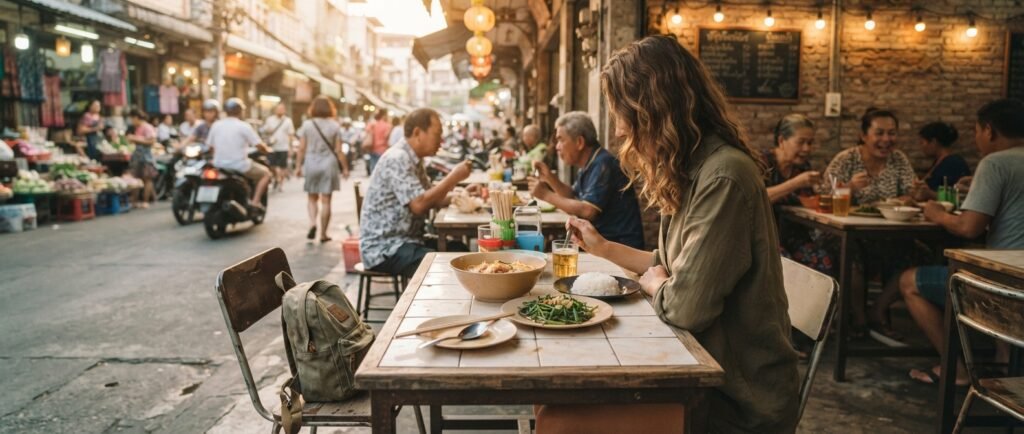
Practical Ways to Reduce Food Costs
Consider:
- Eating at local restaurants
- Trying reasonably priced regional food
- Using markets where appropriate
- Choosing accommodation with useful kitchen facilities when suitable
- Avoiding unnecessary tourist-area markups
- Carrying water where practical
Do Not Cut Out Local Food Completely
Food is an important part of travel.
Saving money does not mean avoiding everything that makes a destination special. Set aside part of your budget for meals or experiences you genuinely want to try.
9. Look for Free Activities
Many destinations have attractions and experiences that cost little or nothing.
Depending on the destination, you might find:
- Public parks
- Walking routes
- Beaches
- Historic neighborhoods
- Markets
- Public viewpoints
- Free cultural events
- Free museum days
Plan Paid and Free Activities Together
Instead of paying for an attraction every day, combine paid experiences with free activities.
For example:
Morning: Free walking tour of a historic area
Afternoon: Paid museum
Evening: Free viewpoint or public park
This can keep your daily spending more balanced.
10. Research Attractions Before Paying
Popular attractions can be worth the cost, but do some research before purchasing tickets.
Check Before You Book
Look for:
- Official ticket prices
- Opening hours
- Free-entry periods
- Advance booking requirements
- Combination tickets
- Student or age-based discounts where applicable
- Cancellation conditions
Use the attraction’s official website for current prices and entry information whenever possible.
11. Avoid Unnecessary Tourist Expenses
Some expenses are easy to overlook because they are small individually.
For example:
- Repeated taxi rides
- Expensive snacks at attractions
- Unplanned shopping
- Convenience-store purchases
- Unnecessary upgrades
- Last-minute transportation
- Extra baggage
Use a Simple Rule
Before spending money, ask:
“Is this something I actually planned to spend money on?”
If the answer is no, take a moment before purchasing.
You do not need to eliminate spontaneous spending completely. Just make sure it fits within your overall budget.
12. Travel With a Daily Budget
A daily budget makes spending easier to monitor.
Example Daily Budget
Imagine you have a daily budget of $60 for expenses after accommodation and flights.
You could divide it roughly like this:
| Category | Example Amount |
| Food | $25 |
| Transportation | $10 |
| Activities | $15 |
| Miscellaneous | $10 |
| Total | $60 |
These figures are only an example. Actual costs vary dramatically between destinations.
If you spend less than your daily target on one day, you may have more flexibility on another day.
13. Use a Travel Expense Tracker
It is easy to lose track of small purchases during a trip.
An expense-tracking app, spreadsheet, or simple note on your phone can help you record spending.
Track Major Categories
Record:
- Accommodation
- Food
- Transportation
- Attractions
- Shopping
- Other expenses
You do not need a complicated system. The purpose is simply to know where your money is going.
14. Be Careful With Currency Exchange
Exchange rates and fees can affect your travel budget.
When paying abroad, check whether your card provider or payment service charges foreign transaction fees.
Before Traveling
Find out:
- Your card’s international fees
- ATM fees
- Currency conversion charges
- Whether your bank needs travel notification
- Available payment methods at your destination
Avoid making assumptions about exchange rates. The rate shown online may differ from the rate you actually receive after fees or provider markups.
15. Build an Emergency Fund
A good travel budget should include money for unexpected situations.
You might need extra funds because of:
- Transportation delays
- Unexpected accommodation
- Lost belongings
- Schedule changes
- Unplanned activities
- Other emergencies
How Much Should You Keep?
There is no universal amount because trip length and destination costs differ.
The important point is to avoid spending your entire budget before the trip is finished.
Keep an emergency reserve separate from your normal daily spending whenever possible.
How to Save Money Before Your Trip
Budget travel starts before you leave home.
Start Planning Early
Early planning gives you more time to:
- Compare flights
- Compare accommodation
- Research transportation
- Understand entry requirements
- Create a realistic budget
- Find activities
However, planning early does not guarantee the cheapest price. Continue comparing options and check the conditions of each booking.
Make a Pre-Trip Savings Plan
If you know your approximate trip cost, divide it by the number of weeks or months before departure.
For example:
Estimated trip budget ÷ months until travel = approximate monthly saving target
This makes a large travel budget feel more manageable.
How to Travel on a Budget as a Couple
Traveling as a couple can create opportunities to share some expenses.
Depending on the destination, you may be able to share:
- Accommodation
- Transportation
- Certain meals
- Some activity costs
Agree on a Budget Before Traveling
Discuss:
- Accommodation level
- Food preferences
- Activities
- Shopping
- Daily spending
- Major experiences
This can prevent disagreements about money during the trip.
How to Travel on a Budget Alone
Solo travel gives you more control over your spending, but you also do not have someone to share certain costs with.
Ways to Manage Costs
Consider:
- Choosing well-located budget accommodation
- Using public transportation
- Planning activities in advance
- Eating at reasonably priced local restaurants
- Avoiding unnecessary transportation
- Tracking daily expenses
When traveling alone, do not choose an option solely because it is cheap if it creates unnecessary safety or logistical concerns.
Budget Travel Does Not Mean Sacrificing Everything
A common misconception is that budget travel means staying in the cheapest accommodation, eating only inexpensive food, and avoiding paid attractions.
That does not have to be the case.
Spend More on What Matters to You
For example:
Save on: Accommodation
Spend on: A special cultural experience
Or:
Save on: Daily transportation
Spend on: A memorable local meal
The goal is not to minimize every expense. It is to make your spending match your priorities.
Common Budget Travel Mistakes
Focusing Only on Cheap Flights
A cheap flight may use an inconvenient airport or require expensive ground transportation.
Choosing the Cheapest Hotel Without Checking the Location
A remote accommodation can increase transportation costs and waste valuable travel time.
Forgetting Additional Fees
Always check baggage, service, transportation, taxes, and other applicable costs before calculating your final budget.
Overplanning Expensive Activities
Booking too many tours and attractions can quickly push you beyond your budget.
Choose the experiences that matter most.
Having No Emergency Reserve
Unexpected costs can happen on any trip. Keep some money aside rather than allocating every dollar to planned expenses.
Trying to Save Money in Unsafe Ways
Do not sacrifice reasonable safety or essential travel requirements just to save a small amount of money.
Budget Travel Checklist
Before your trip, check:
- Set a total travel budget
- Estimate daily spending
- Compare flight options
- Check baggage costs
- Compare accommodation
- Calculate transportation costs
- Research free activities
- Set aside money for paid attractions
- Check payment and currency fees
- Keep an emergency reserve
- Check current entry requirements
- Consider travel insurance
- Save important booking information
Frequently Asked Questions
How can I travel on a budget?
Start by choosing a destination that fits your budget, then compare flights, accommodation, transportation, food, and activities. Set a daily spending limit and track your expenses during the trip.
What is the cheapest way to travel?
There is no single cheapest method for every destination. Depending on the trip, savings may come from flexible travel dates, affordable accommodation, public transportation, local food, and free activities.
How much money should I budget for a trip?
The amount depends on your destination, trip length, accommodation, transportation, food, activities, and travel style. Calculate the major fixed expenses first, then estimate your daily spending and add an emergency reserve.
How can I save money on accommodation?
Compare different accommodation types, travel during less busy periods when practical, and check the location before booking. A slightly more expensive property in a convenient location can sometimes reduce transportation costs.
Is it cheaper to travel during the off-season?
It can be, but not always. Prices vary by destination and time of year. Check airfare, accommodation, weather, and local events before deciding when to travel.
How can I save money on food while traveling?
Consider reasonably priced local restaurants, markets, and accommodation options that allow you to prepare some meals when practical. However, leave room in your budget for local food experiences you genuinely want to enjoy.
Are budget hotels worth it?
They can be, but price should not be your only consideration. Check recent reviews, location, included facilities, cancellation conditions, and additional fees before booking.
How can I reduce transportation costs?
Use public transportation and walk when practical. Compare transportation options and consider how frequently you will need to travel between your accommodation and attractions.
Should I avoid paid attractions when traveling on a budget?
Not necessarily. Choose the attractions that matter most to you and balance them with free or low-cost activities.
How can I avoid overspending during a trip?
Create a daily budget, track your expenses, and leave some money for unexpected costs. Avoid making frequent unplanned purchases that can add up over several days.
Final Thoughts
Learning how to travel on a budget is not about making every part of your trip as cheap as possible. It is about spending your money where it creates the most value for you.
Start by choosing a destination that fits your overall budget. Then compare travel dates, flights, accommodation, transportation, food, and activities. Look at the complete cost rather than focusing on one cheap option.
During your trip, track your spending, use public transportation when practical, explore free attractions, and keep some money available for unexpected expenses.
Most importantly, do not let your budget stop you from enjoying the destination. A well-planned trip can include affordable choices as well as a few special experiences that you will remember long after you return home.
Travel Tip: Prices, transportation schedules, entry requirements, accommodation policies, and other travel details can change. Check current information from official sources before making important bookings or travel decisions.